

Introduction
Architecture does not disappear after sunset.
It simply begins to rely on light instead of daylight.
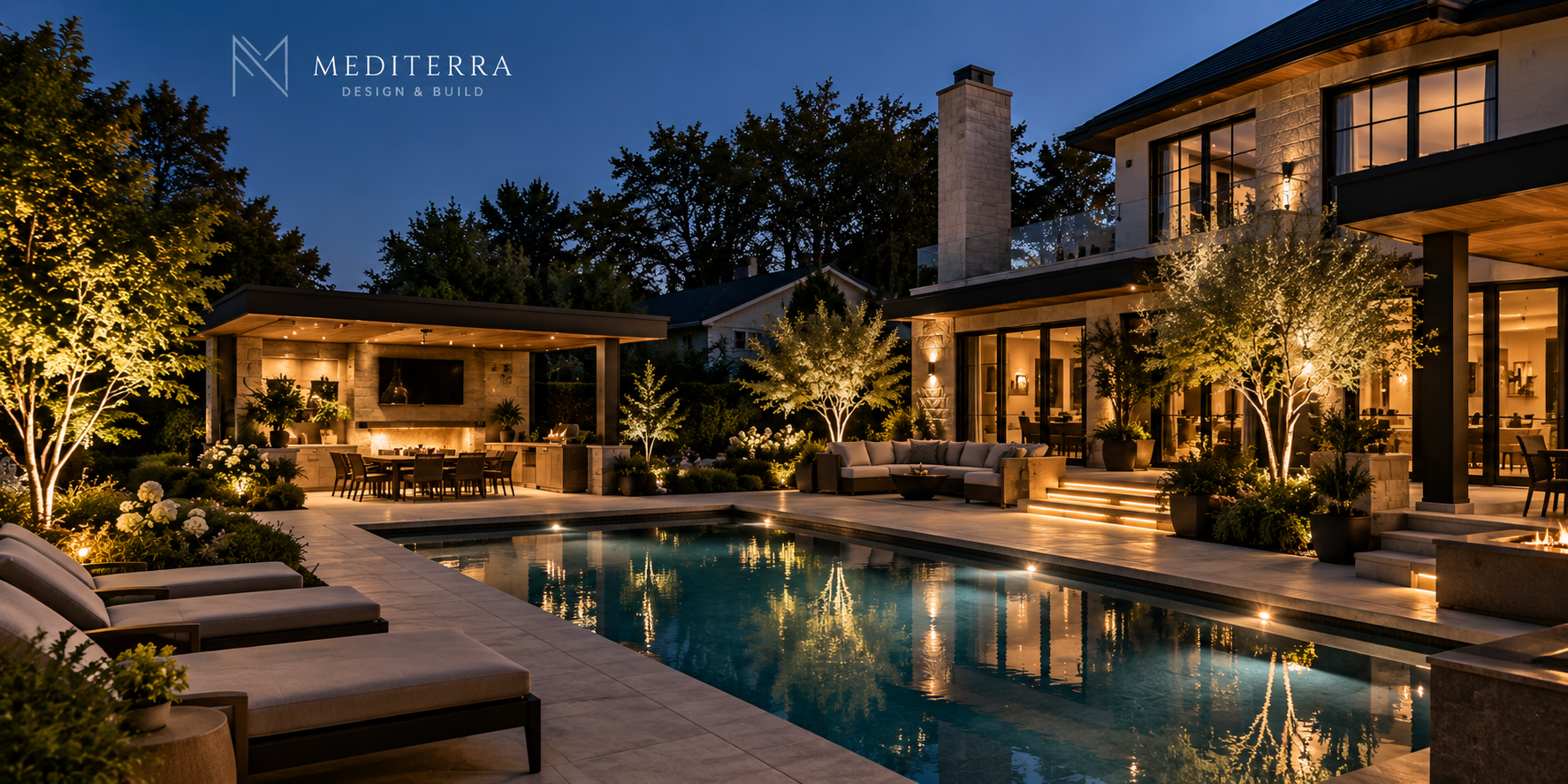
Throughout the day, sunlight defines proportion, texture, and form. As evening arrives, carefully composed lighting quietly assumes that role, revealing the architecture in an entirely different way. Walls gain depth. Trees become sculptural. Water reflects movement and light. Outdoor rooms that felt open during the day become warm, intimate places to gather.
The most memorable residential landscapes are not those with the greatest number of fixtures. They are the ones where light feels effortless. Where every element is revealed with purpose and nothing competes unnecessarily for attention.
Across Toronto and the Greater Toronto Area, homeowners increasingly view outdoor lighting as an essential component of residential design rather than a finishing touch added after construction. When integrated from the earliest stages of planning, lighting strengthens the relationship between architecture, landscape, and outdoor living while extending the enjoyment of the property well beyond daylight hours.
At Mediterra Design & Build, lighting is considered an architectural material. It is designed alongside the landscape itself, allowing every outdoor environment to evolve naturally from day into evening.
Light Reveals What Daylight Cannot
During daylight hours, every surface receives equal attention.
After sunset, light becomes selective.
It decides where the eye travels, which textures emerge, and how the landscape is experienced. A carefully illuminated limestone wall reveals subtle texture that may go unnoticed during the day. The grain of natural wood gains warmth. A mature Japanese Maple becomes a sculptural focal point against the evening sky.
Exceptional lighting is therefore less about illumination than it is about composition.
Rather than flooding a landscape with brightness, thoughtful lighting creates contrast. Areas of light are balanced by areas of shadow, allowing the architecture to breathe while establishing visual hierarchy throughout the property.
The result feels calm rather than dramatic.
Sophisticated rather than theatrical.
This principle has long guided architectural lighting. Exterior environments deserve the same restraint.

Layering Light Creates Atmosphere
One of the most common misconceptions in landscape lighting is that brighter spaces feel more inviting.
In reality, comfort comes from balance.
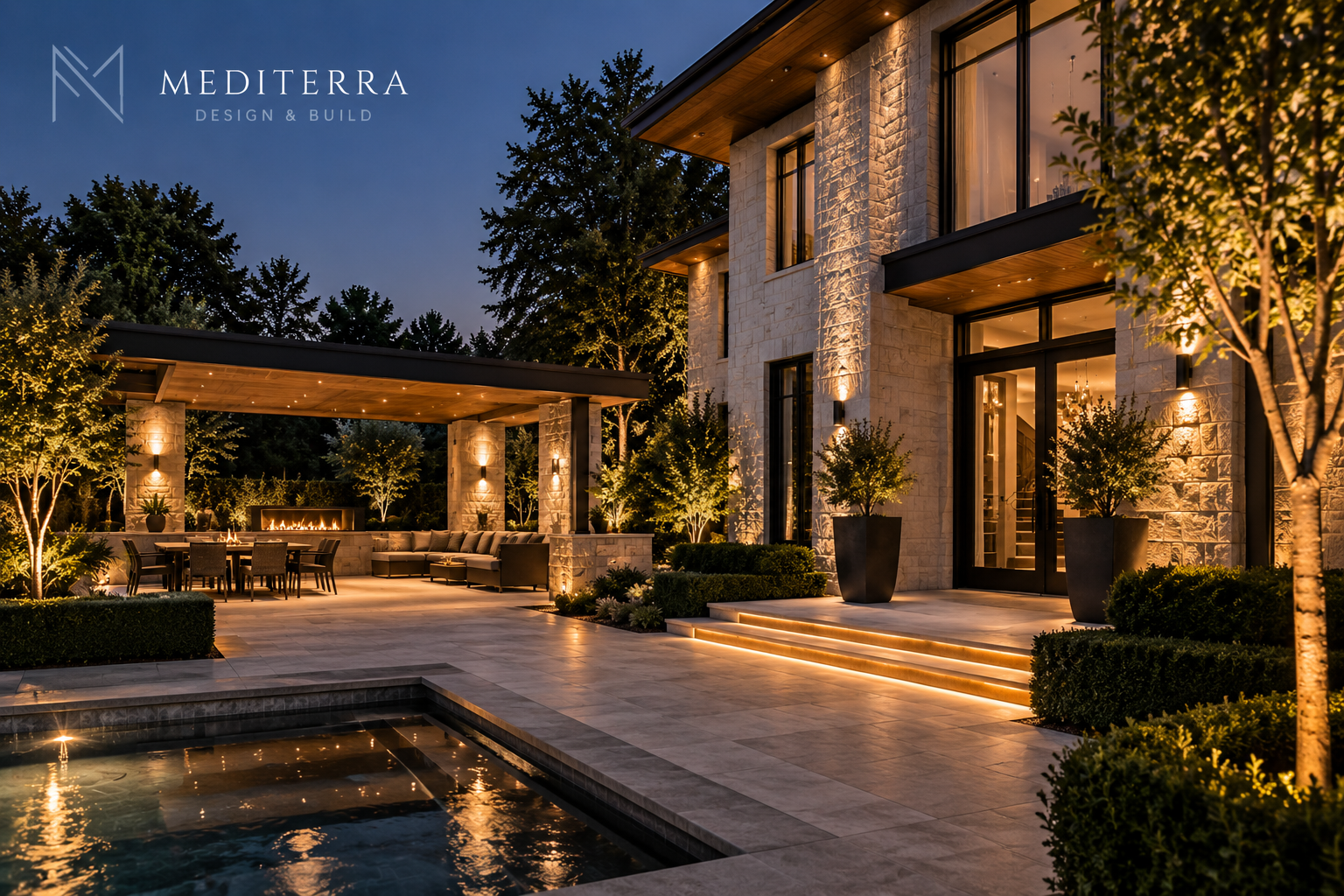
Exceptional outdoor environments rely on layers of light, each serving a different purpose while contributing to one unified atmosphere.
Architectural lighting defines the residence.
Landscape lighting introduces depth within planting.
Path lighting quietly guides movement.
Task lighting supports cooking and dining.
Accent lighting celebrates focal points without overwhelming them.
Each layer is subtle on its own.
Together, they create an outdoor environment that feels complete.
This layered approach allows homeowners to move naturally throughout the property while preserving the calm character that distinguishes thoughtfully designed landscapes from spaces that feel over lit.
The objective is never to eliminate darkness.
It is to use darkness as part of the composition.
The Places Where People Gather
Some of the most memorable moments within a home occur outdoors after sunset.
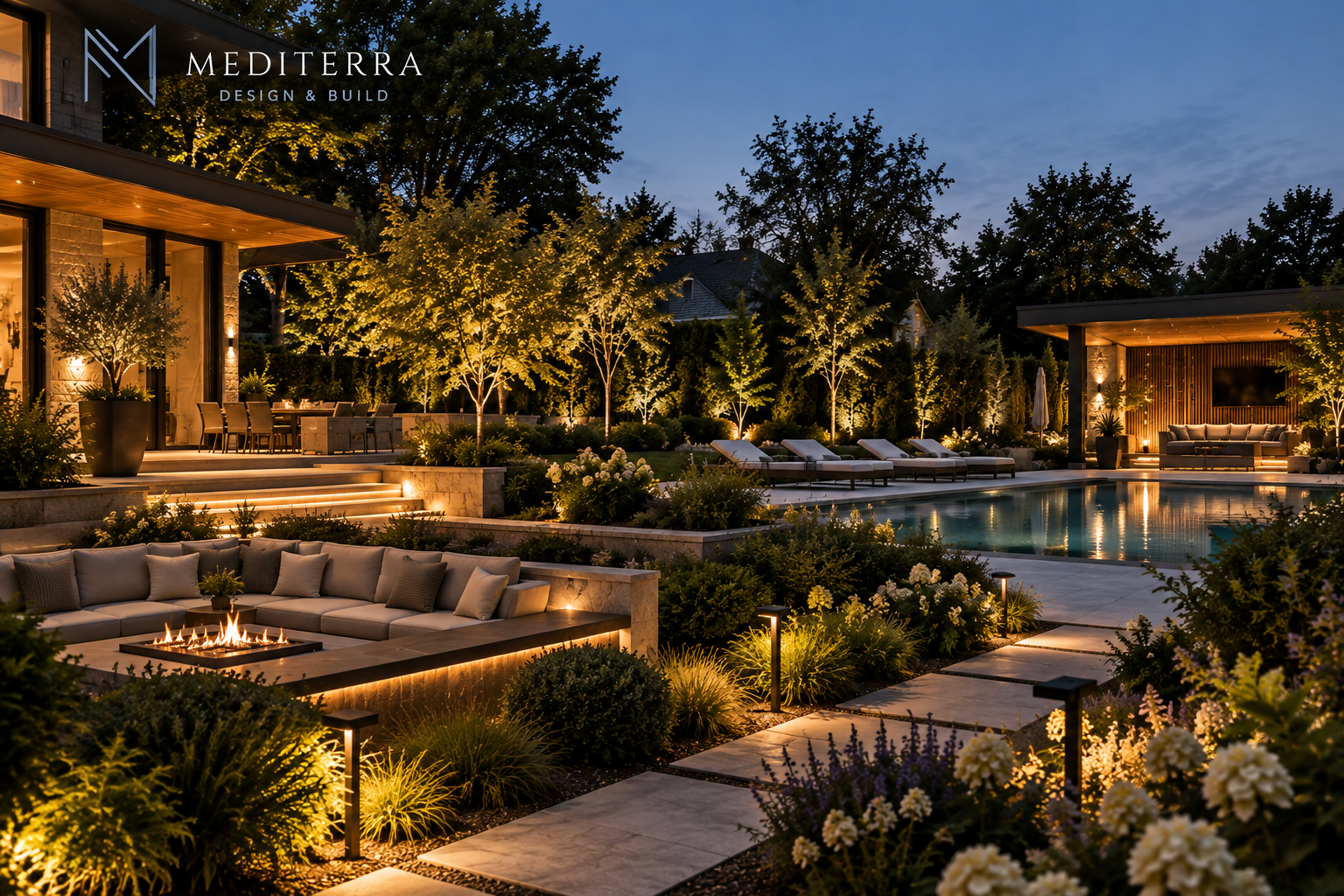
Conversation lingers around an outdoor kitchen long after dinner has finished. Family gathers beneath the shelter of a pavilion while children continue swimming nearby. A fire feature becomes the centre of the evening as softly illuminated planting creates a sense of enclosure without feeling confined.
Lighting quietly supports every one of these experiences.
Rather than drawing attention to individual fixtures, thoughtful lighting reinforces how each outdoor room is used. Dining spaces benefit from warm, comfortable illumination that encourages conversation. Seating areas feel intimate without becoming enclosed. Covered structures become welcoming extensions of the home rather than isolated backyard features.
When designed together, lighting strengthens the relationship between these gathering spaces, allowing movement throughout the property to feel effortless.
"Discover how thoughtfully designed outdoor kitchens become natural gathering spaces in our Designing the Ultimate Outdoor Kitchen Insight article."
"Explore how covered structures extend outdoor living well beyond summer in our Pavilion Design for Four-Season Outdoor Living Insight article."
Water Becomes the Landscape's Mirror
Few materials respond to light as beautifully as water.
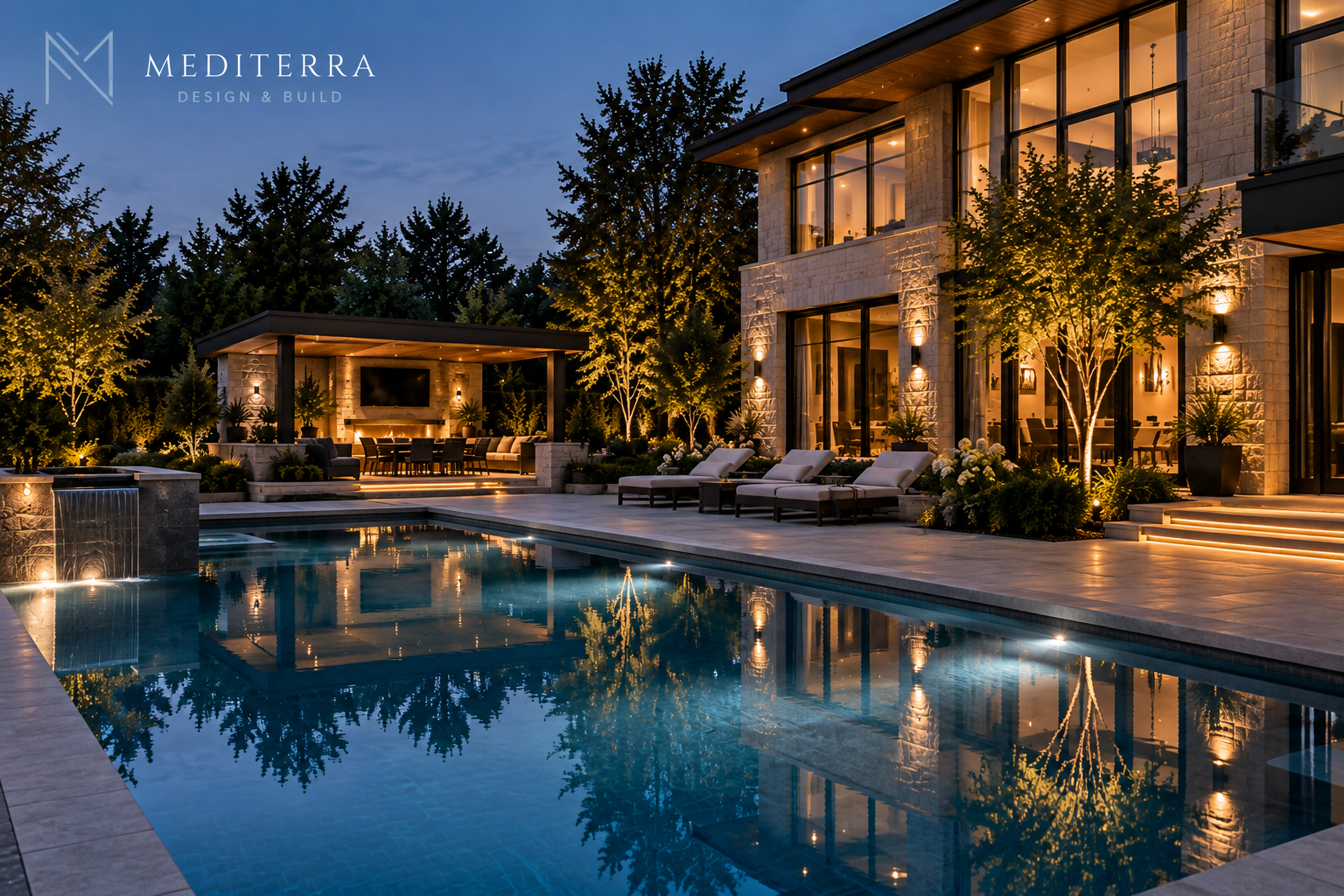
During the day, a pool reflects the sky and surrounding architecture. As evening approaches, it becomes something entirely different—a living surface that captures movement, colour, and atmosphere while amplifying the character of the surrounding landscape.
When thoughtfully illuminated, water extends the visual depth of the property. Reflections soften architectural forms, reveal changing perspectives, and create a quiet sense of movement that cannot be achieved through static materials alone.
The most successful pool lighting is rarely the brightest. Instead, it is carefully balanced with the surrounding environment so that water becomes one element within the overall composition rather than dominating it.
When architecture, planting, and lighting work together, the pool naturally becomes the visual anchor of the evening landscape.
"Discover how water becomes an architectural element in our Pools as Architecture: Designing Water in the Landscape Insight article."
Guiding Movement Without Being Seen
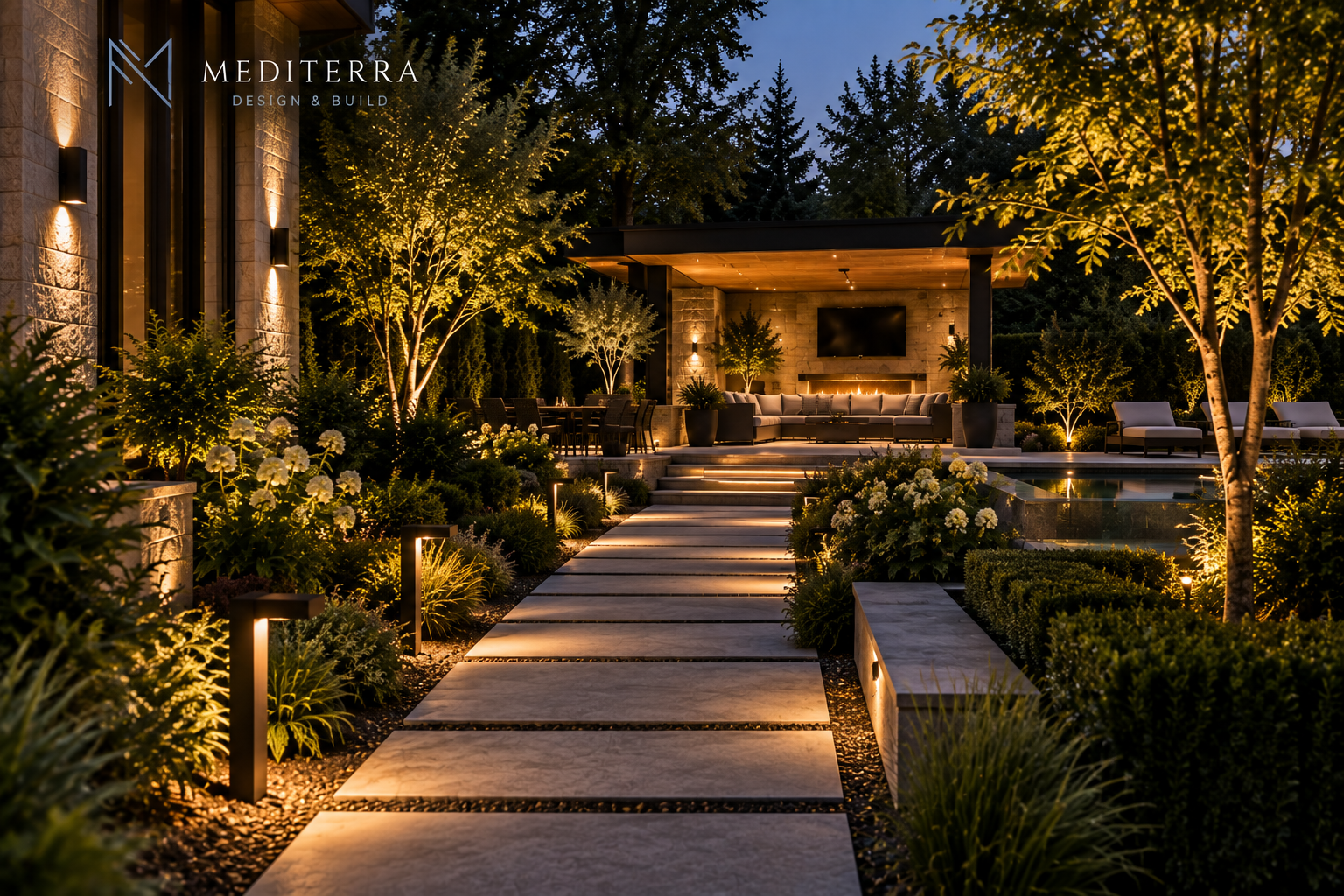
One of the quietest yet most important roles of outdoor lighting is helping people move naturally through a property.
Well-designed pathways rarely announce themselves. Instead, they gently encourage movement from one destination to the next without interrupting the atmosphere of the landscape.
The rhythm created by carefully spaced lighting allows terraces, garden walks, and transitions between outdoor rooms to feel intuitive. Rather than directing attention toward the fixtures themselves, the illumination becomes almost invisible, quietly defining circulation while preserving the calm character of the environment.
This principle extends beyond pathways.
Steps become easier to navigate. Changes in elevation are subtly revealed. Garden edges become softly defined. The entire property feels welcoming without ever appearing overlit.
The best outdoor lighting is often the lighting people never consciously notice.
They simply feel comfortable moving through the space.
Designing for Every Season
Outdoor lighting should perform beautifully throughout the entire year, not only during the height of summer.
Across Toronto and the Greater Toronto Area, landscapes change dramatically with the seasons. Deciduous trees reveal intricate branch structures during winter, snow introduces entirely new reflective qualities, and the lower angle of the sun creates longer shadows throughout autumn and early spring.
Thoughtfully designed lighting adapts to these seasonal transformations rather than working against them.
Fixtures should be carefully integrated during the design phase, allowing wiring, conduit, and mounting locations to disappear within the architecture and landscape. Selecting durable, weather-resistant fixtures ensures the lighting system continues to perform reliably despite snow, moisture, temperature fluctuations, and repeated freeze-thaw cycles common throughout Southern Ontario.
When infrastructure is planned from the outset, the result is a cleaner installation, greater flexibility for future adjustments, and a landscape that continues to evolve gracefully over time.
Lighting Is About Emotion, Not Brightness
Perhaps the greatest misconception surrounding outdoor lighting is that its purpose is simply to make a property brighter.
Its true purpose is to influence how a place feels.
Warm pools of light encourage conversation. Gentle illumination beneath mature trees creates a sense of calm. Architectural walls gain depth through carefully controlled shadow. Reflections across water introduce movement while preserving tranquillity throughout the landscape.
Every lighting decision shapes emotion before it shapes visibility.
The most memorable outdoor environments are therefore not the brightest ones.
They are the ones that feel effortless.
This quiet restraint is what allows architecture, landscape, and outdoor living to remain the focus while lighting works almost invisibly in the background.
Conclusion
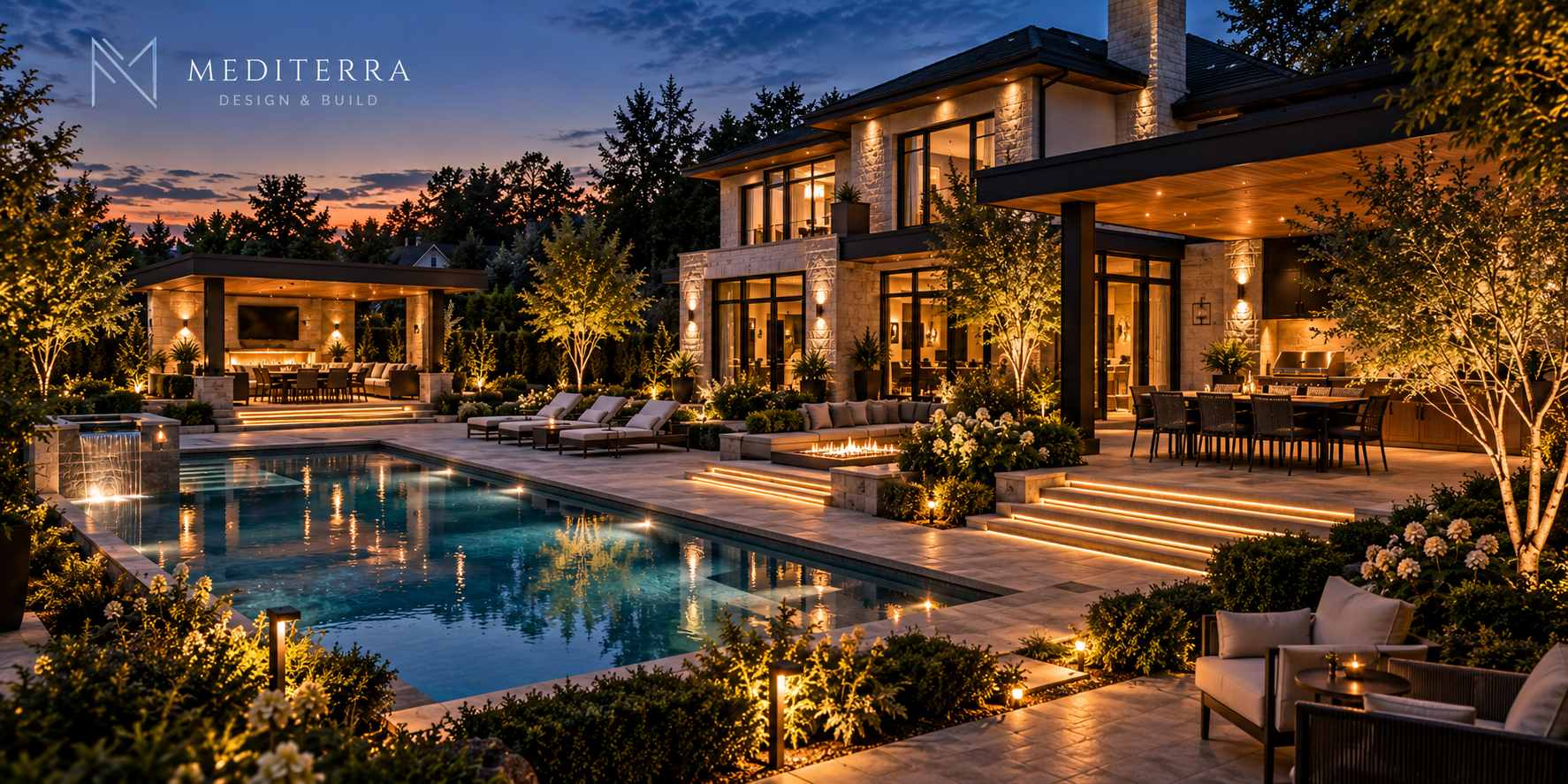
Exceptional outdoor lighting is not measured by the number of fixtures installed or the brightness of the landscape. It is measured by how naturally light reveals architecture, guides movement, and enriches the experience of the spaces people use every day.
When approached as part of the overall design rather than an afterthought, lighting strengthens every layer of the residential environment. Architecture gains depth. Gardens become more expressive. Water reflects the surrounding composition. Outdoor rooms remain welcoming well into the evening, allowing the landscape to be experienced in entirely new ways.
Across Toronto and the Greater Toronto Area, homeowners are increasingly recognising that the most memorable landscapes are those that continue to inspire after sunset. Achieving that level of refinement requires more than selecting quality fixtures. It requires understanding how light shapes the experience of an entire property.
At Mediterra Design & Build, lighting is conceived as an integral component of architectural outdoor living, bringing together structure, landscape, and atmosphere to create residential environments that are both timeless and unforgettable.