

Introduction
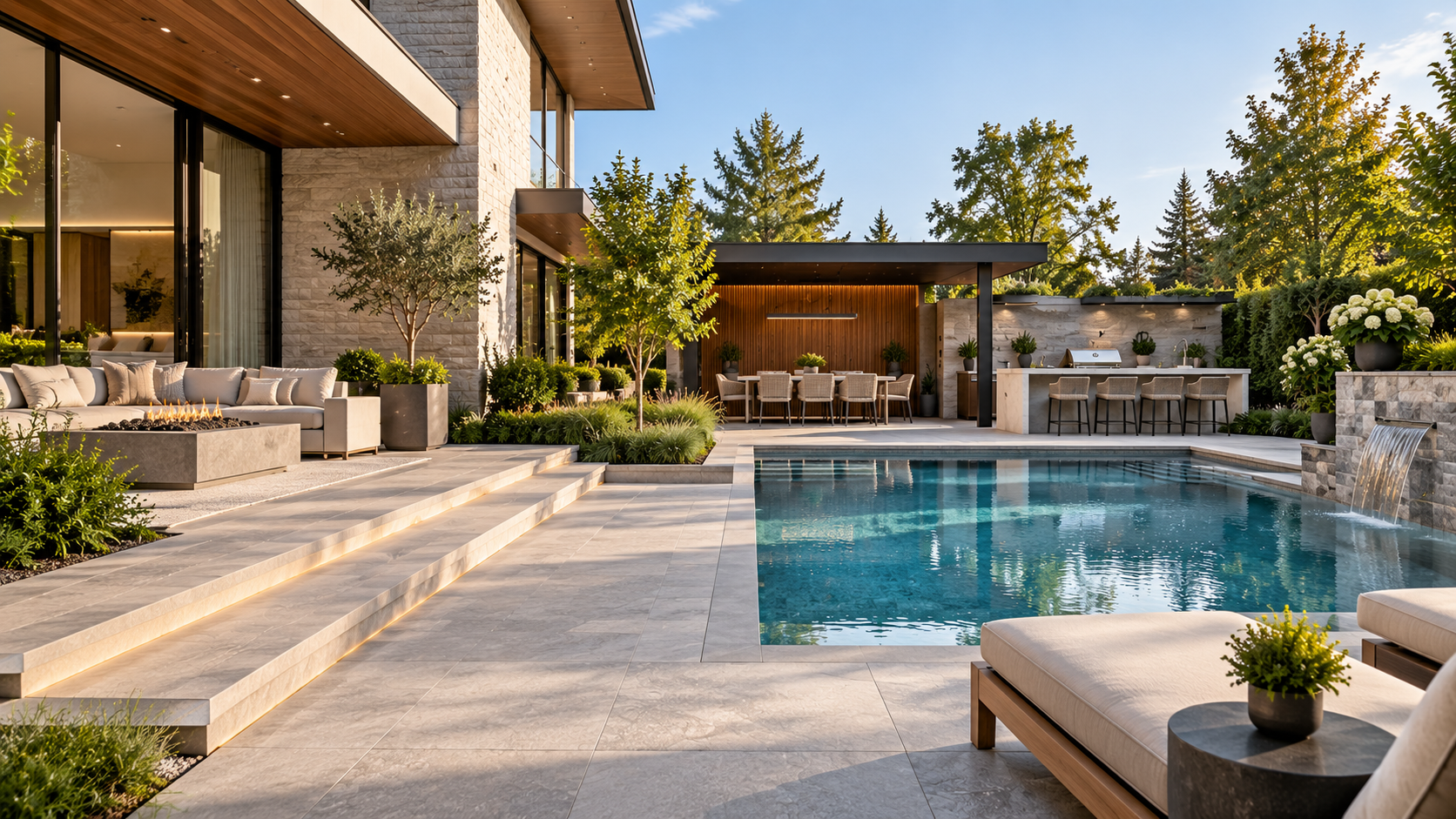
The character of an outdoor environment is rarely defined by a single feature. More often, it is shaped by the materials that quietly connect architecture, landscape, and outdoor living into one cohesive composition.
While features such as pools, outdoor kitchens, and pavilions naturally attract attention, it is the thoughtful selection and repetition of materials that give these spaces their sense of permanence and refinement. Stone, porcelain, wood, steel, concrete, and planting each contribute to the overall experience, but only when they are considered together rather than as individual design decisions.
The most memorable residential environments rarely rely on an abundance of finishes. Instead, they demonstrate restraint. A carefully curated palette allows the architecture to remain the focal point while creating visual continuity throughout the property.
Across Toronto and the Greater Toronto Area, homeowners are increasingly investing in outdoor environments that reflect the same level of design consideration found within their interiors. Material selection has therefore become far more than a construction decision. It is a fundamental part of architectural design.
At Mediterra Design & Build, every material is selected not only for its performance, but for the role it plays within the larger composition of the home and landscape.
Materials Create Architectural Continuity
One of the defining characteristics of exceptional residential design is consistency.
Rather than introducing a different material at every opportunity, the strongest outdoor environments rely on a restrained palette that repeats throughout the property. This repetition establishes visual rhythm, strengthens the relationship between architecture and landscape, and allows individual spaces to feel connected rather than isolated.
A limestone step may reappear as pool coping. The porcelain selected for a terrace may continue beneath a covered pavilion. Architectural steel used within the residence may subtly influence the detailing of exterior structures. These relationships are rarely accidental; they are carefully composed.
The result is an environment where every material feels intentional, allowing the eye to move comfortably through the property without distraction.
This approach reflects one of the most enduring principles of architecture: continuity creates calm.
"Explore how integrated planning creates cohesive residential environments in our Architectural Outdoor Living service page."
Restraint Often Creates Greater Luxury
Luxury is frequently misunderstood.
Many assume it comes from incorporating more materials, more textures, and more decorative elements. In reality, the opposite is often true.
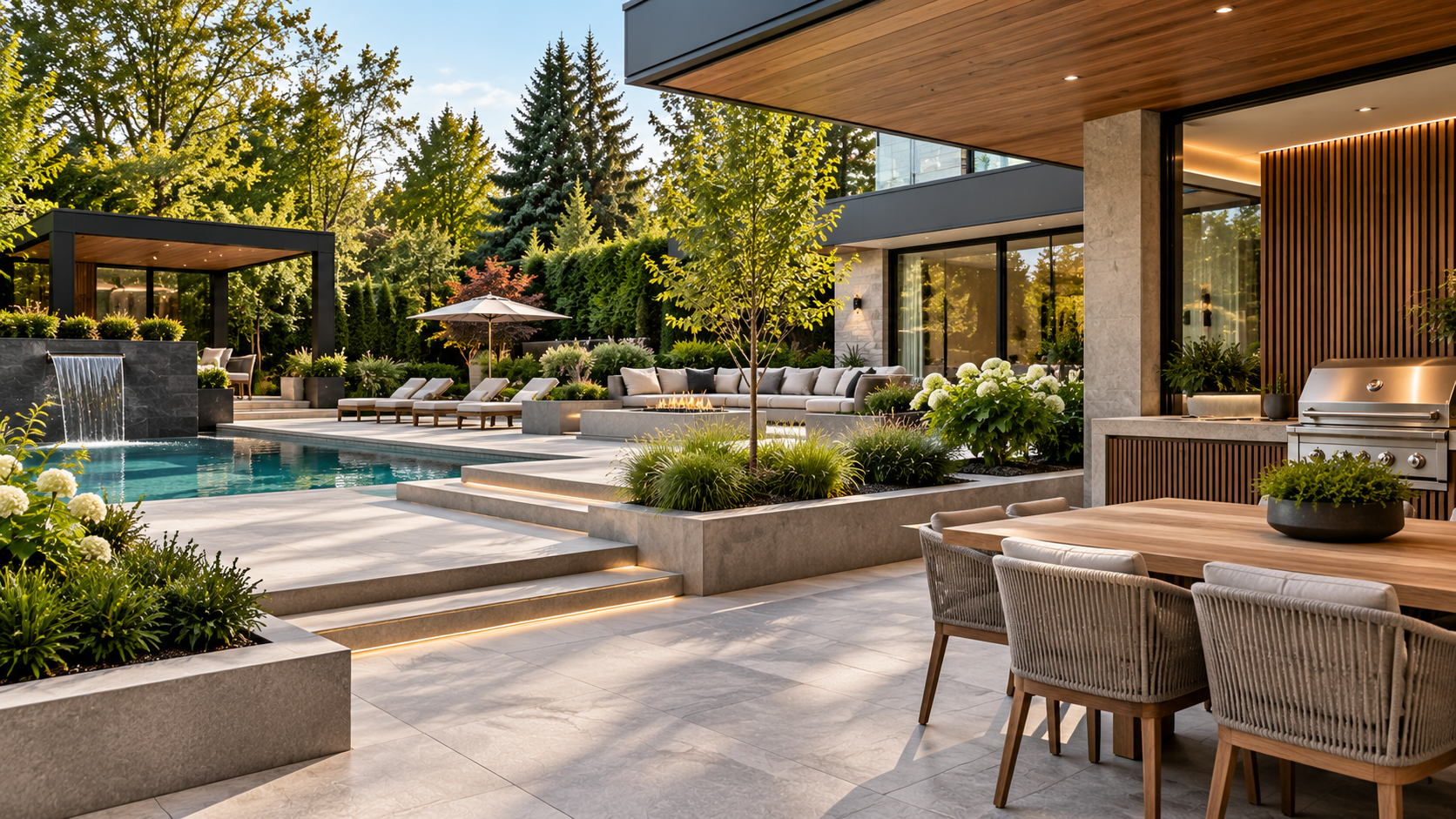
Some of the world's most memorable residential environments rely on only three or four primary materials repeated with discipline and consistency. This restrained approach allows craftsmanship, proportion, and architectural form to become the defining characteristics of the project rather than an abundance of competing finishes.
Restraint also allows the landscape to mature gracefully over time. As planting evolves and natural materials weather, the environment develops character without losing its architectural clarity.
This philosophy is particularly important in residential landscapes where multiple elements, including pools, pavilions, outdoor kitchens, and terraces which must coexist within one unified composition.
The objective is not to showcase individual materials.
It is to create harmony between them.
Porcelain: Precision Through Performance
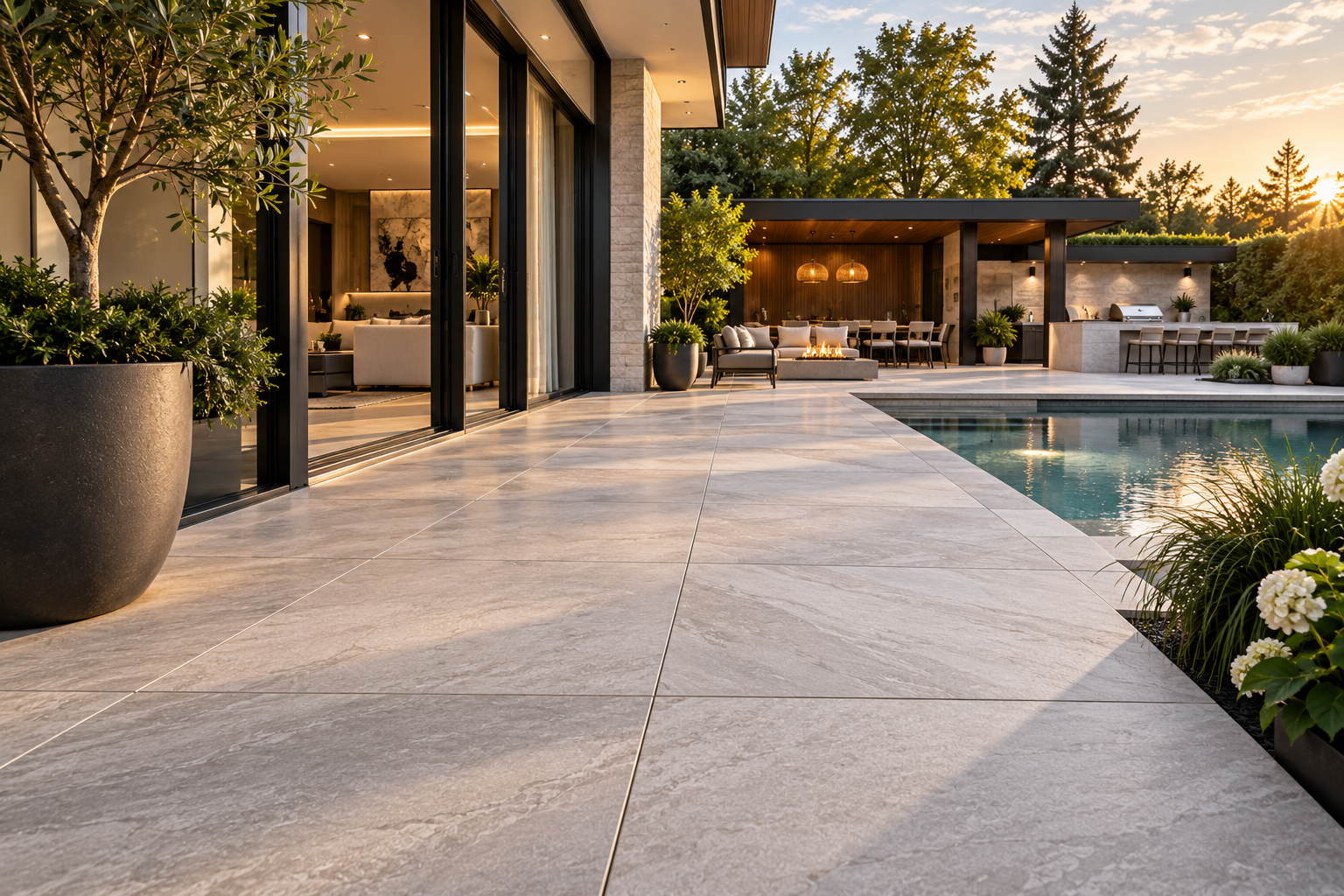
Porcelain has become one of the defining materials in contemporary outdoor living, not simply because of its durability, but because it allows designers to achieve exceptional precision while maintaining a refined architectural appearance.
Unlike many traditional paving materials, large-format porcelain offers remarkably consistent colour, texture, and dimensional accuracy. This creates clean lines, crisp transitions, and uninterrupted visual planes that complement both contemporary and transitional residential architecture.
Its technical performance also makes it particularly well suited to Canadian climates. Premium porcelain surfaces absorb very little moisture, helping them withstand Southern Ontario's freeze-thaw cycles while resisting staining, fading, and everyday wear.
Large-format porcelain products, including architectural sintered stone surfaces such as Dekton®, have also become increasingly popular for outdoor kitchens, feature walls, and custom fire tables where UV stability, heat resistance, and long-term durability are equally important.
Yet the greatest strength of porcelain lies beyond performance.
When thoughtfully integrated, it allows architecture, not the paving itself, to remain the visual focus.

Natural Stone Introduces Character
While porcelain celebrates precision, natural stone introduces authenticity.
No two pieces of limestone, granite, or sandstone are exactly alike. Subtle variations in colour, texture, and veining create depth that cannot be manufactured, allowing landscapes to develop character while remaining timeless.
Rather than competing with architecture, natural stone often softens it. Its inherent imperfections introduce warmth and texture, balancing the clean geometry frequently found in contemporary residential design.
For this reason, natural stone continues to be used throughout many of the world's most enduring landscapes—from terraces and garden steps to retaining walls, pool coping, and architectural features.
Selecting natural stone is rarely about following trends.
It is about choosing materials that mature gracefully and continue to enrich the landscape as the property evolves over time.
Craftsmanship Is Found Where Materials Meet
The quality of a residential environment is rarely judged by the material itself.
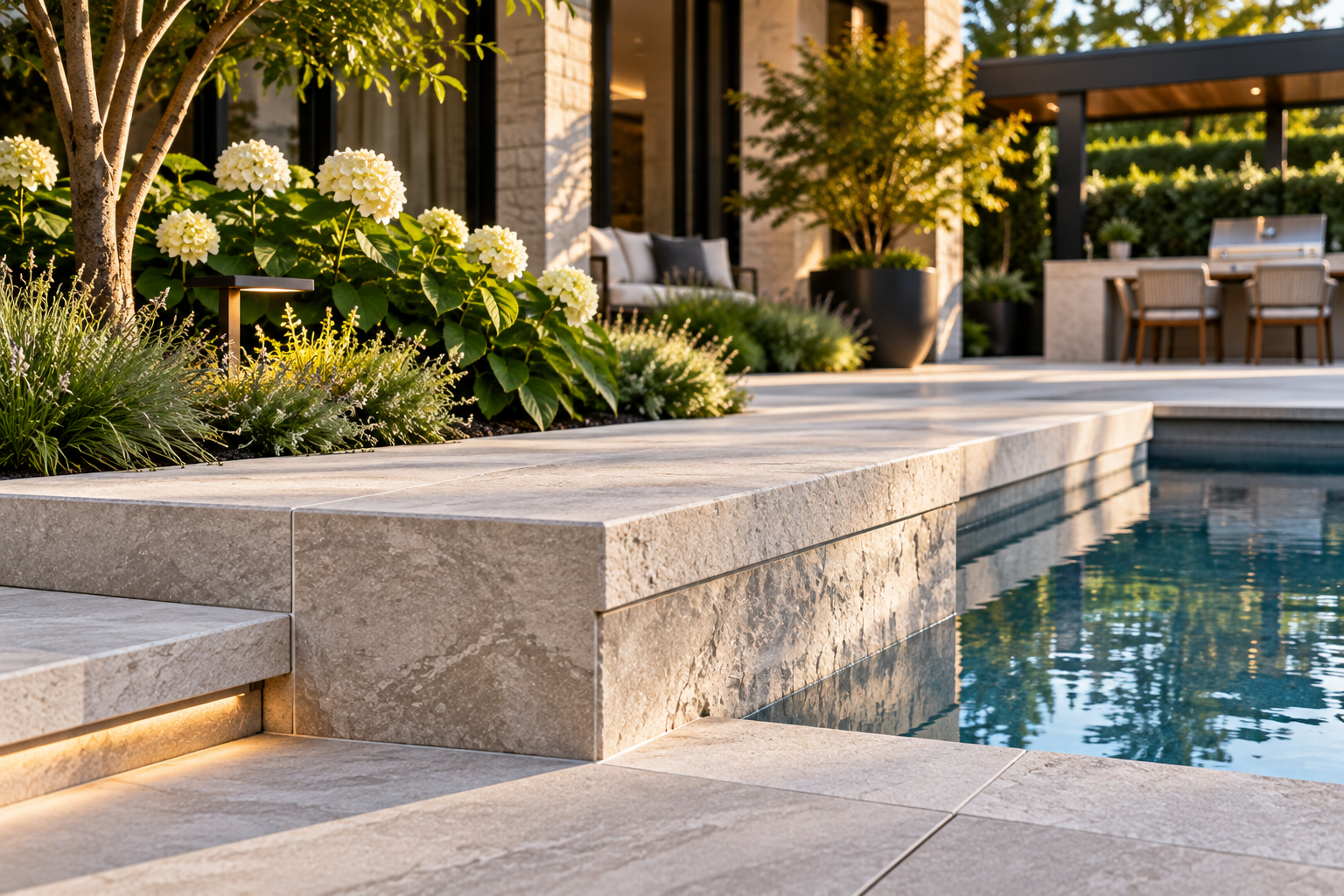
It is judged by the precision with which one material transitions to another.
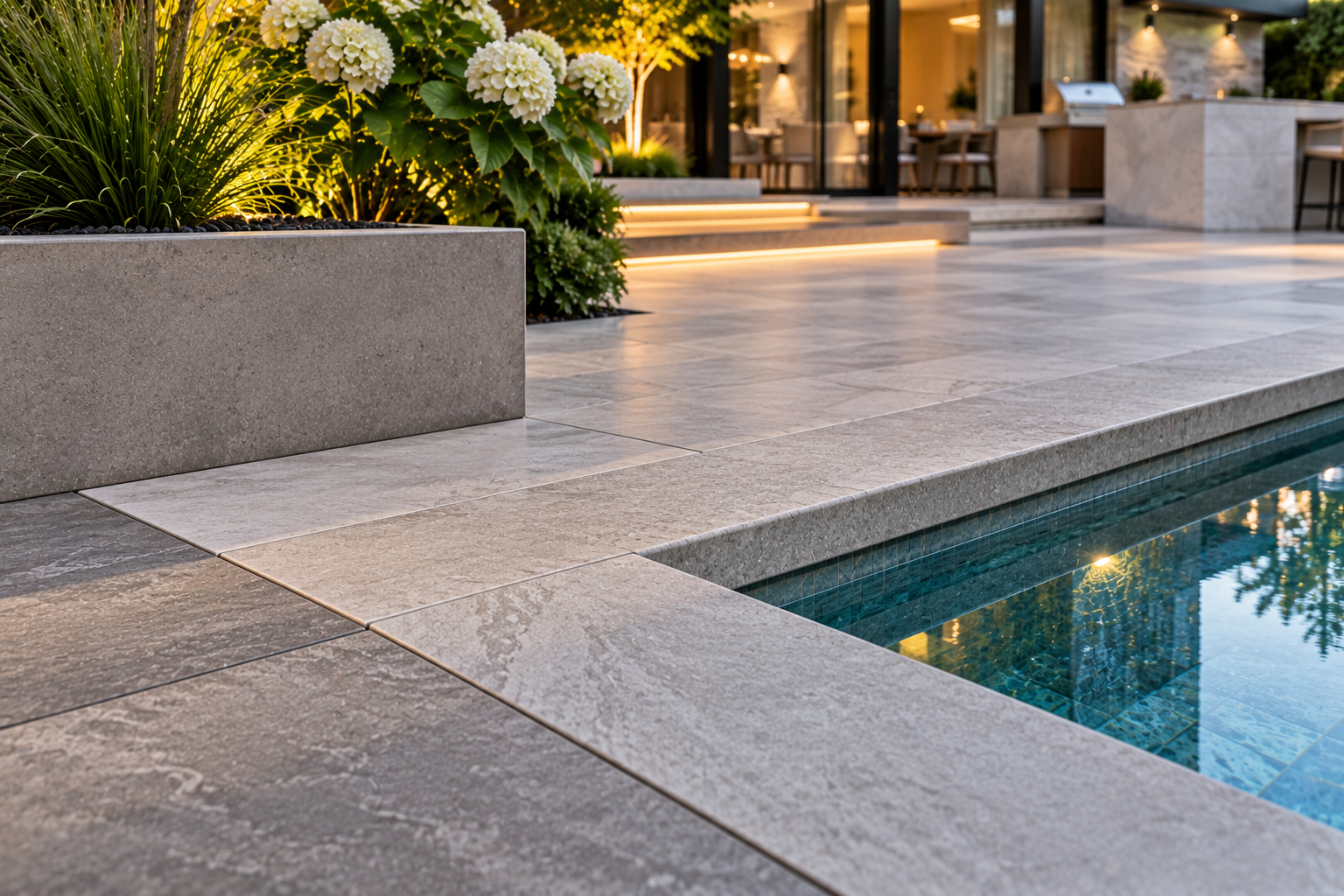
The junction between porcelain and natural stone.
The alignment of coping with water.
The reveal where steel meets timber.
The edge of a stair.
The consistency of joint spacing.
These seemingly small details often determine whether an outdoor environment feels ordinary or exceptionally refined.
Thoughtful detailing allows each material to retain its own identity while contributing to a larger architectural composition.
This level of craftsmanship is rarely noticed consciously.
Instead, it is experienced instinctively through the overall sense of order and refinement.
It is often these quiet moments of precision that distinguish exceptional residential projects from merely well-built ones.
Materials Must Endure, Not Merely Impress
Exceptional materials should continue to perform beautifully long after construction is complete.
Outdoor environments throughout Toronto and the Greater Toronto Area experience intense seasonal changes. Snow, ice, heavy rainfall, summer heat, and repeated freeze-thaw cycles place significant demands on every exterior surface.
Selecting materials therefore requires balancing aesthetics with long-term performance.
Durability.
Slip resistance.
Structural stability.
Ease of maintenance.
Colour permanence.
These considerations influence every design decision.
The objective is not simply to create a beautiful project on the day it is completed.
It is to create an environment that remains visually cohesive and structurally reliable for decades.
Timeless landscapes are measured by how gracefully they age.
A Cohesive Material Language
Every residence tells a story through its architecture.
The landscape should continue that story rather than introduce a different one.
When the same material language extends from the interior of the home into terraces, outdoor kitchens, pavilions, pool environments, and garden spaces, the entire property begins to feel larger, calmer, and more unified.
This continuity is one of the defining characteristics of sophisticated residential design.
It allows individual spaces to maintain their own purpose while contributing to a greater whole.
Materials become more than construction products.
They become the vocabulary through which architecture communicates.
"See how thoughtful material selection strengthens outdoor gathering spaces in our Designing the Ultimate Outdoor Kitchen Insight article."
"Discover how carefully selected materials shape water-focused landscapes in our Pools as Architecture: Designing Water in the Landscape Insight article."
"Learn how covered structures extend architectural continuity in our Pavilion Design for Four-Season Outdoor Living Insight article."
Conclusion
The most memorable outdoor environments are rarely defined by a single material.
They are defined by the relationships between materials.
Stone that transitions naturally into architecture.
Porcelain that quietly extends interior spaces outdoors.
Concrete that provides structure without dominating the landscape.
Steel and timber that reinforce the character of the residence.
When these elements are selected with restraint and composed with intention, they create environments that feel timeless rather than trend-driven.
Across Toronto and the Greater Toronto Area, homeowners are increasingly seeking outdoor spaces that reflect the same architectural integrity found within their homes. Achieving that level of refinement requires more than selecting premium materials—it requires understanding how those materials contribute to a unified residential composition.
At Mediterra Design & Build, material selection is never an isolated decision. It is part of a broader architectural vision where every surface, texture, and transition contributes to creating residential environments that are cohesive, enduring, and thoughtfully crafted.